AI-First Design System
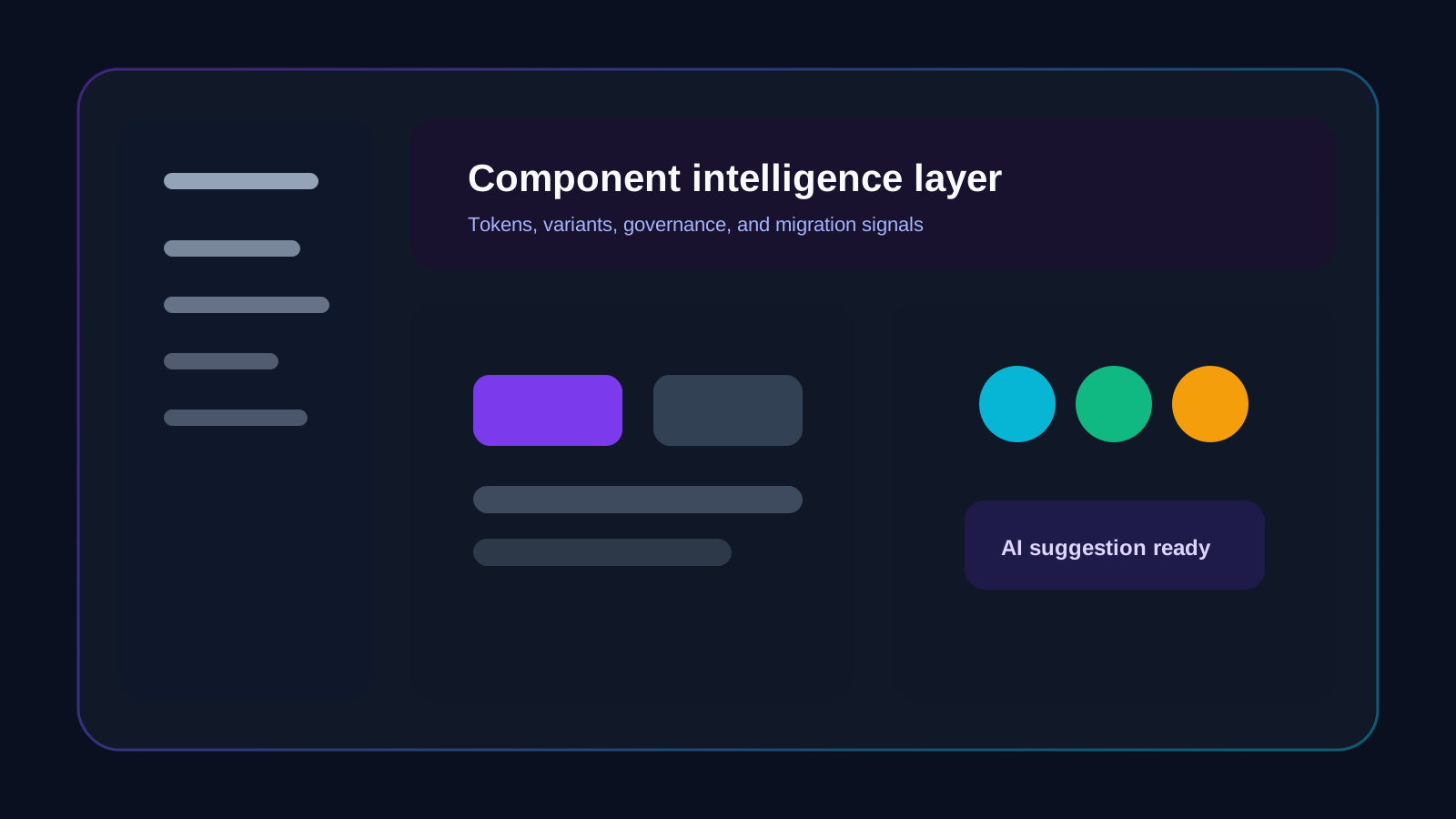
Building the industry's first AI-powered design system — a living, adaptive component library where tokens are generated, variants are suggested, and inconsistencies are surfaced automatically, adopted across 200+ enterprise clients and 30+ product teams.
Client
DesignForge Systems
Role
Principal Design Engineer
Timeline
18 months · 2023–2024
Team
12 designers · 30+ engineers
Five years of enterprise design debt, compressing a 400-person org
DesignForge Systems had grown from a Series A startup to a 400-person enterprise in under five years. That velocity came at a cost: 17 disconnected component libraries across 9 product lines, zero token standardization, and a 3-month lag between design decisions and engineering implementation.
The fragmentation meant every new feature was reinvented from scratch. Accessibility was an afterthought. Brand consistency was aspirational at best. The design team spent 60% of their time answering questions rather than solving problems.
The mandate was unambiguous — consolidate everything, introduce AI-assisted tooling to scale design decision-making, and do it without halting a product roadmap in full flight.
The model suggests. The team decides.
Every AI-generated token, component variant, and migration recommendation landed in a review queue with owner, rationale, confidence, and rollback path. The interface was designed around intervention, not blind automation.
40+ discovery interviews, distilled
01
The 60/40 problem
60% of design work was rework: re-explaining decisions, rebuilding components, and reconciling inconsistencies introduced in handoff.
02
Cognitive overload at scale
Engineers faced 1,200+ undocumented Figma components with no clear hierarchy. Choosing the right component required tribal knowledge.
03
AI as a force multiplier
87% of participants said token suggestions, auto-variant generation, and contrast analysis would meaningfully change how they worked.
Screens, flows, and governance artifacts
Six phases across 18 months
01
Discovery & Audit
Full audit of all 17 existing libraries. Catalogued 1,200+ components, identified 340 unique patterns, mapped overlaps and contradictions.
6 weeks
02
Token Architecture
Designed a 3-tier token system covering color, typography, spacing, elevation, brand aliases, and theme modes.
4 weeks
03
AI Feature Design
Prototyped token suggestions, auto-variant generation, accessibility audit, redundancy detection, and natural language component search.
8 weeks
04
Core Component Build
Built 300+ production-ready components in Figma and React with variant sets, interaction states, accessibility properties, and examples.
16 weeks
05
Migration & Adoption
Phased migration across 9 product lines with advocates, migration tooling, replacement scripts, and adoption dashboards.
10 weeks
06
Governance & Evolution
Established an RFC process, contribution model, design system council, and weekly semantic releases.
Ongoing
The choices that defined the outcome
Challenge
Token naming chaos across 17 libraries
Solution
Introduced a strict primitive / semantic / component taxonomy with automated linting.
Impact
Zero naming conflicts after rollout; 80% reduction in handoff clarification requests.
Challenge
AI suggestions felt intrusive
Solution
Moved AI features to an opt-in side panel with confidence scores and explanations.
Impact
94% of beta users rated AI suggestions as genuinely useful.
Challenge
Engineering reluctance to migrate
Solution
Built migration codemods and a per-PR compliance diff.
Impact
Full codebase migration completed in 10 weeks vs. a 24-week estimate.
Results that moved the business
Components shipped
Atomic through organism, fully accessible
Enterprise clients
Adopted within 12 months of launch
Faster design cycles
Average feature delivery time, post-adoption
From audit to production
End-to-end delivery timeline
A governance workflow that designers could actually use
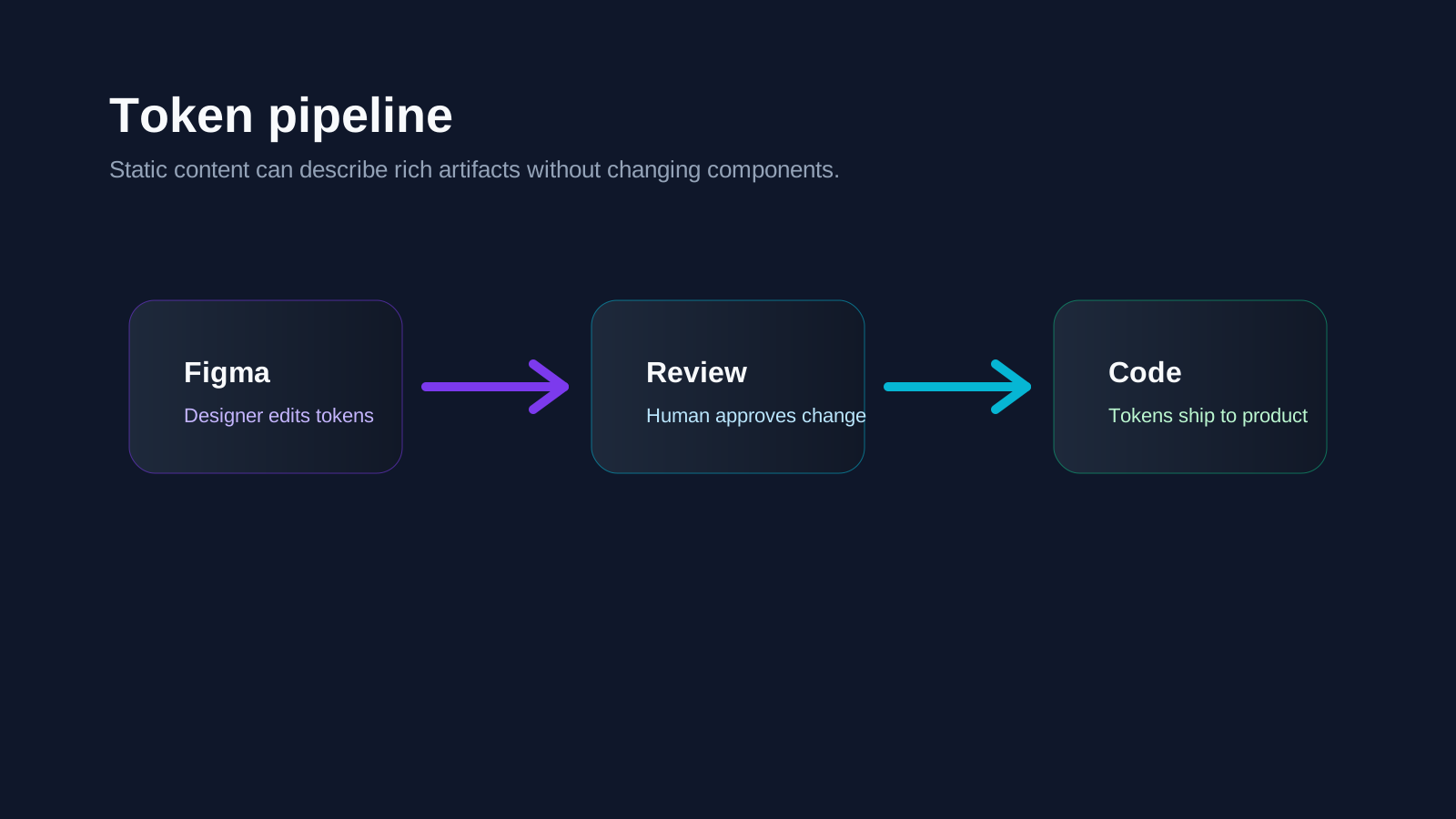
The product had to make governance feel like part of the work, not a separate ceremony. Suggestions were grouped by component, surfaced with confidence and impact, and assigned to the right owner automatically.
Designers could approve, reject, override, or send a suggestion back for refinement without leaving the review surface.
What this case study can include next
Replaceable case-study video
"What Alex built isn't just a component library — it's a new way of thinking about design at scale. The AI features felt like science fiction in our first meeting and shipped to production eight months later."
Jordan Wei
VP of Design, DesignForge Systems
More projects to explore
 Web App
FinanceFlow Enterprise
Complex financial analytics platform for 2M+ users — real-time data visualization, AI insights, multi-tenant architecture.
 Platform
Nexus Design Platform
Internal design tooling platform for Fortune 100 client — token management, component playground, design-to-code pipeline.
 Web App
Orbit SaaS Dashboard
B2B enterprise project management with real-time collaboration, AI task suggestions, and advanced analytics for 50+ person teams.